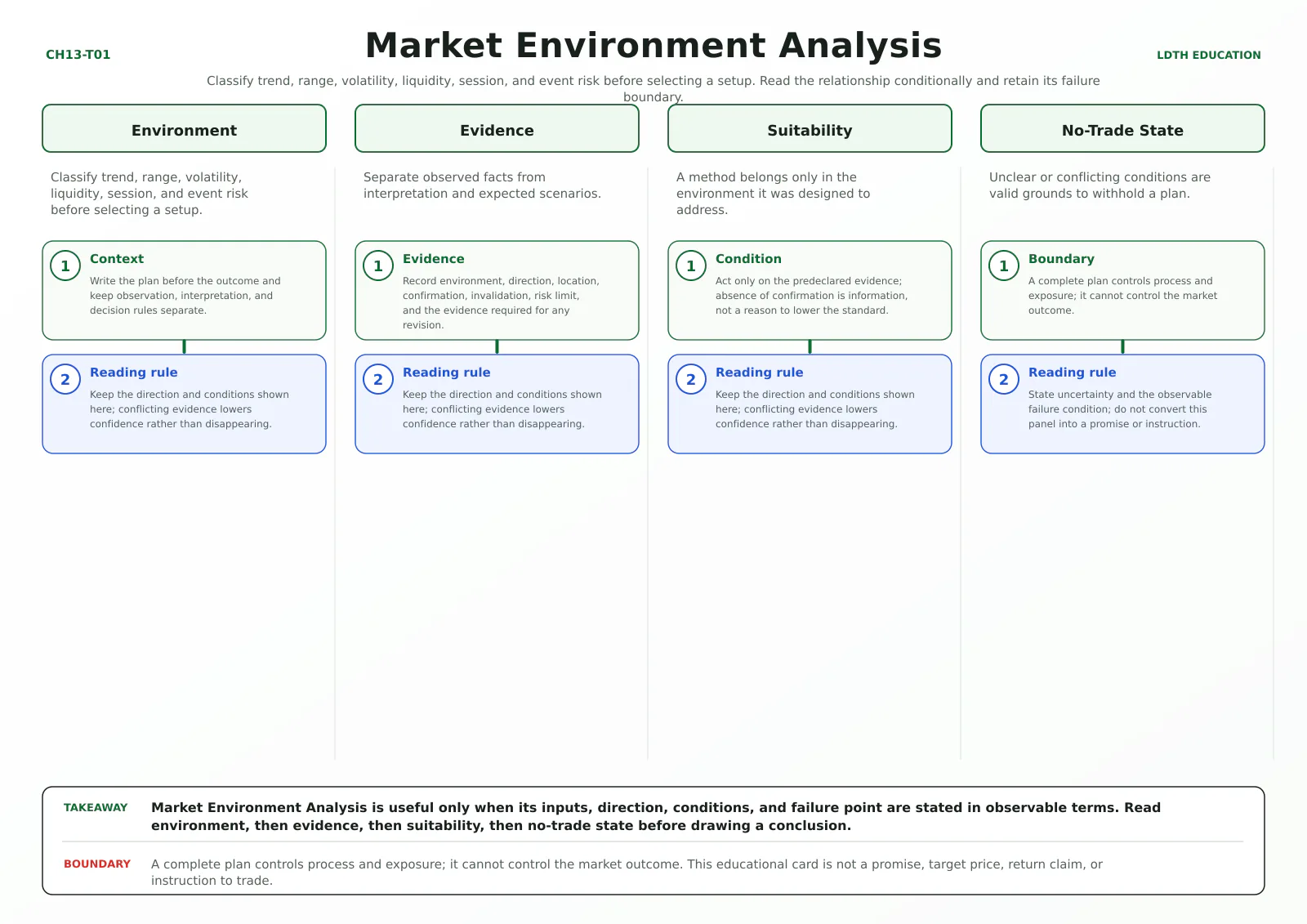
Market Environment Analysis
Classify trend, range, volatility, liquidity, session, and event risk before selecting a setup. Read the relationship conditionally and retain its failure boundary.

CHAPTER 13 · VIDEO COURSE
Turn context, evidence, entry, invalidation, target and sizing into one reviewable plan.
5 reviewed videos · English + Simplified Chinese captions
VIDEO LESSONS
Choose an episode after expanding the player. Autoplay is disabled.
LEARNING CARDS
12 cards; select a card to open it at full size.
Classify trend, range, volatility, liquidity, session, and event risk before selecting a setup. Read the relationship conditionally and retain its failure boundary.
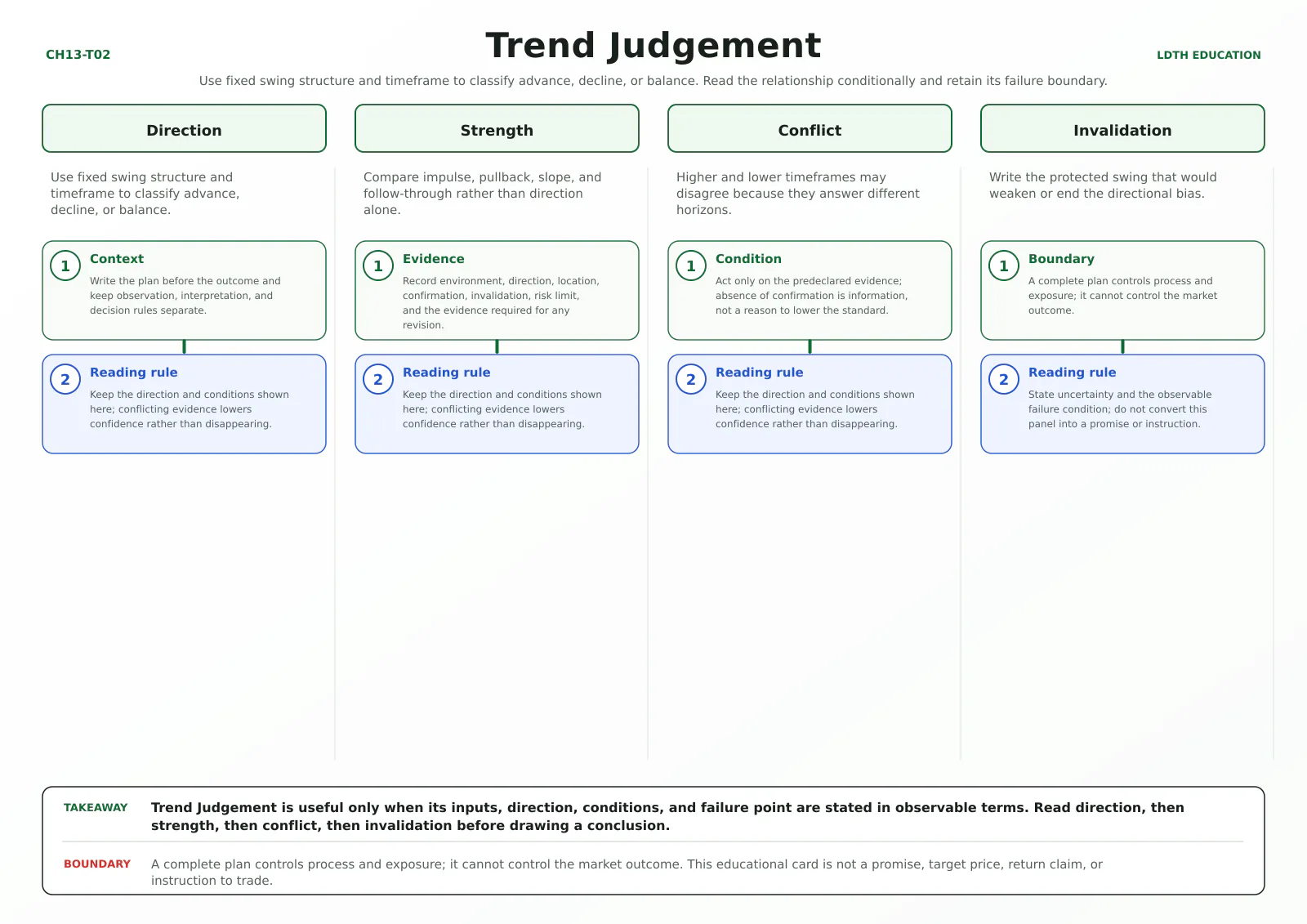
Use fixed swing structure and timeframe to classify advance, decline, or balance. Read the relationship conditionally and retain its failure boundary.
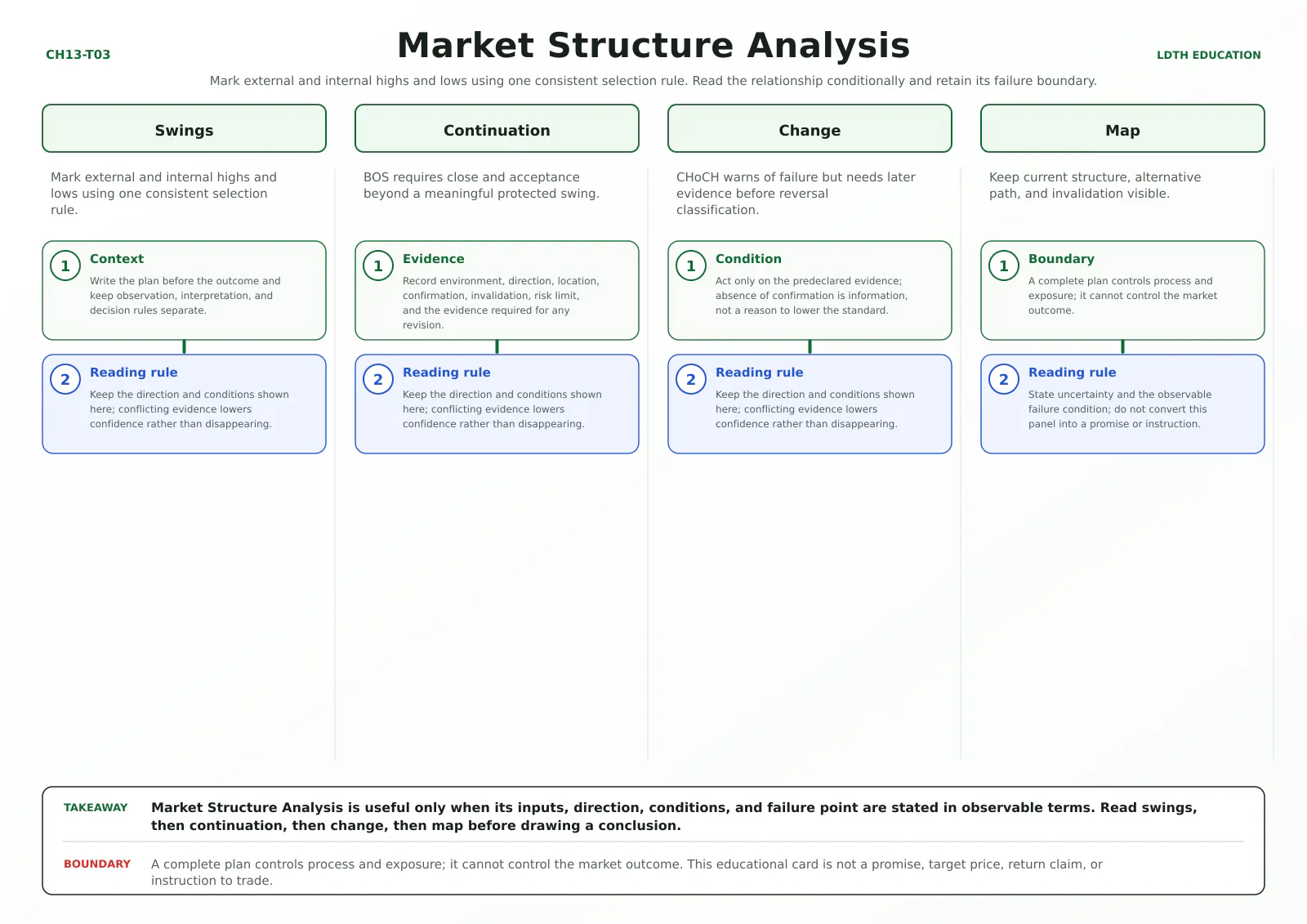
Mark external and internal highs and lows using one consistent selection rule. Read the relationship conditionally and retain its failure boundary.
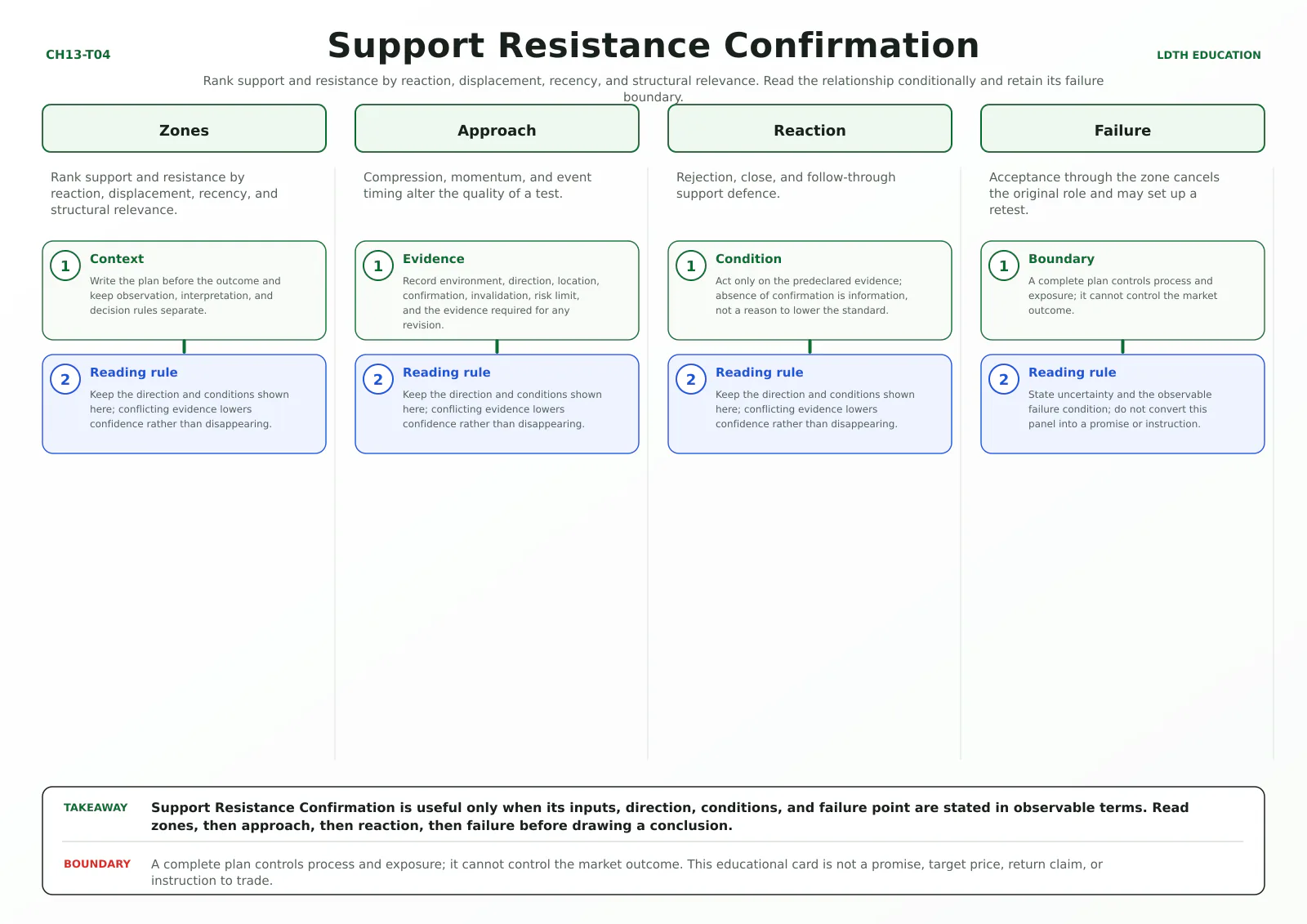
Rank support and resistance by reaction, displacement, recency, and structural relevance. Read the relationship conditionally and retain its failure boundary.
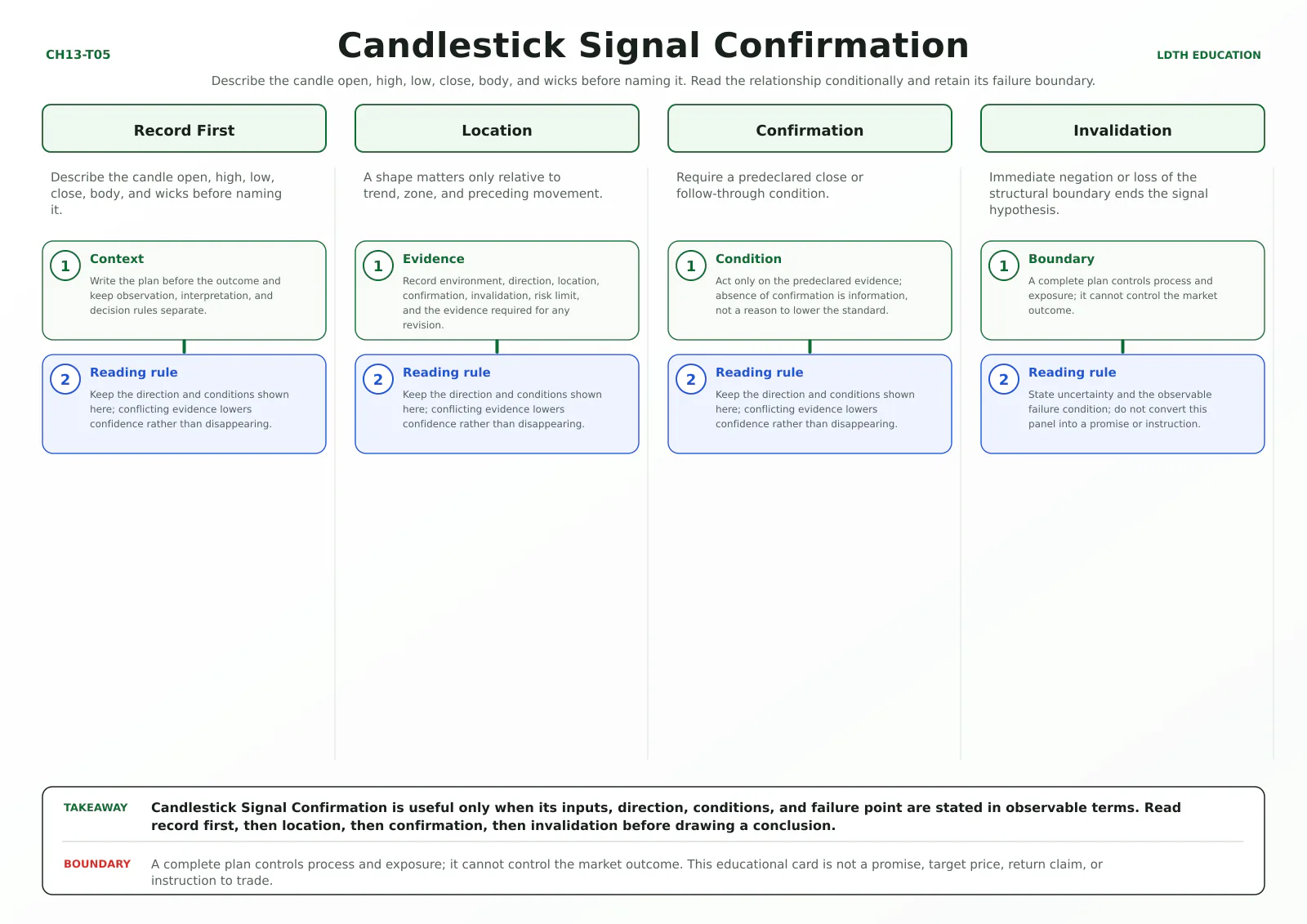
Describe the candle open, high, low, close, body, and wicks before naming it. Read the relationship conditionally and retain its failure boundary.
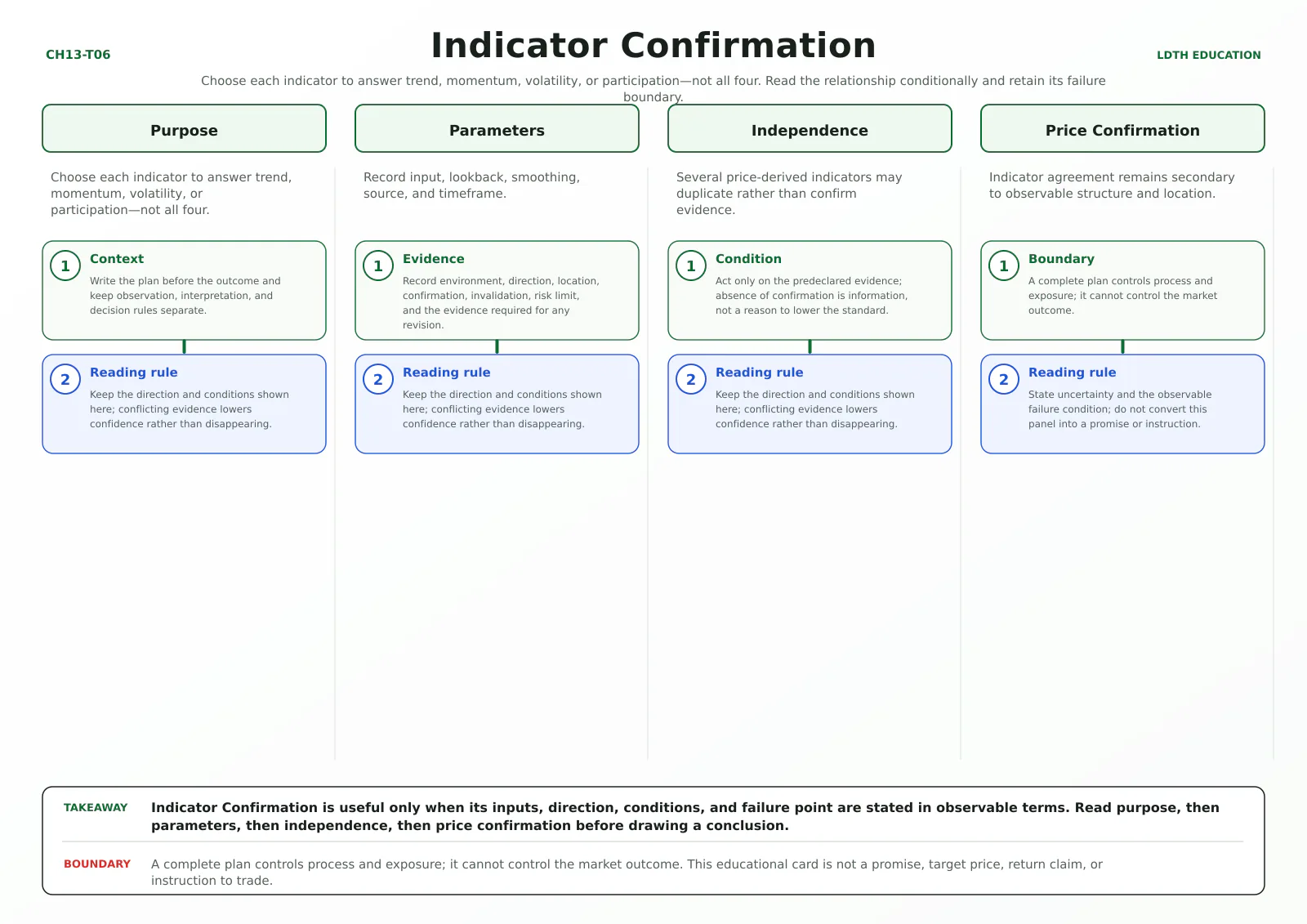
Choose each indicator to answer trend, momentum, volatility, or participation—not all four. Read the relationship conditionally and retain its failure boundary.
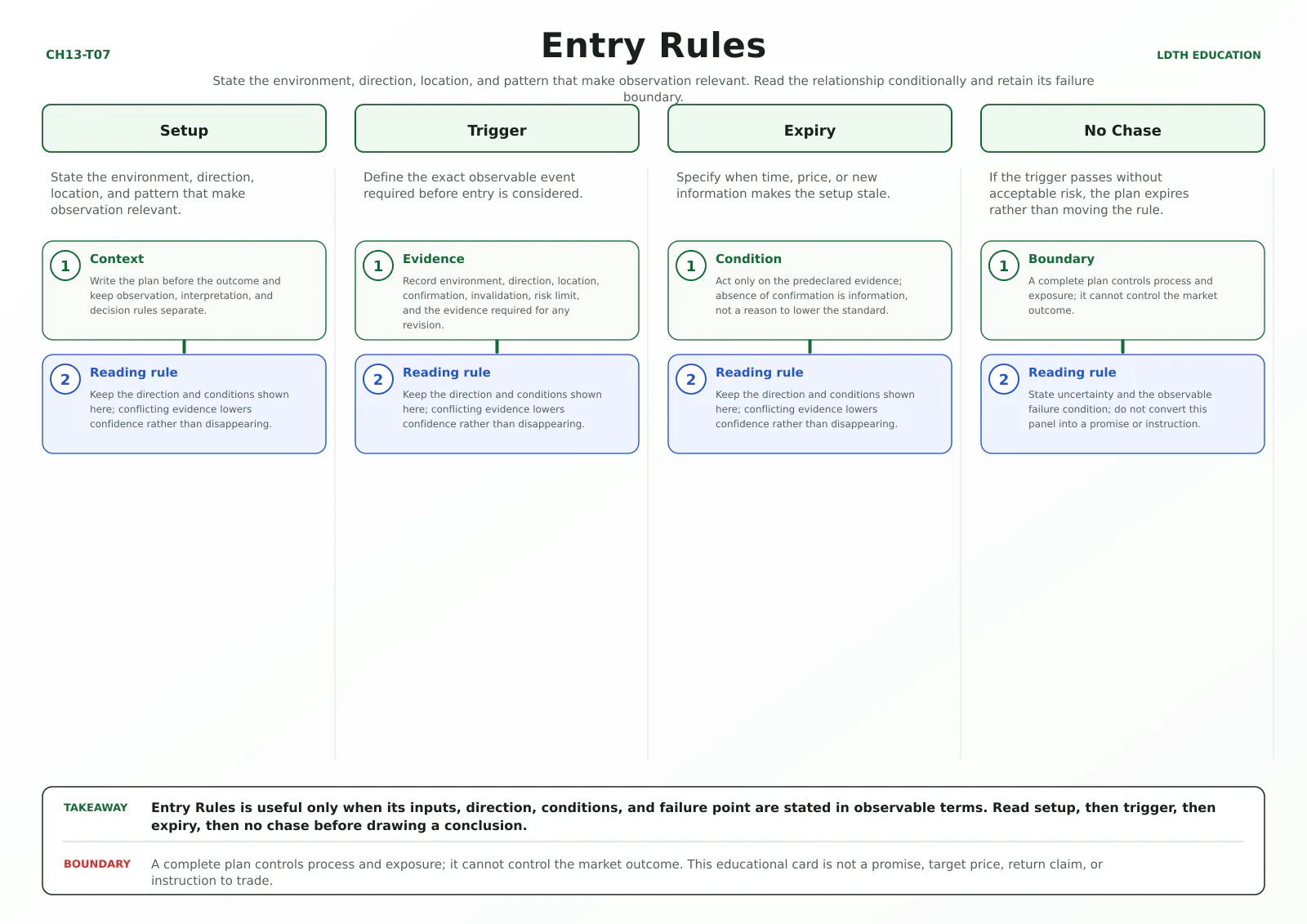
State the environment, direction, location, and pattern that make observation relevant. Read the relationship conditionally and retain its failure boundary.
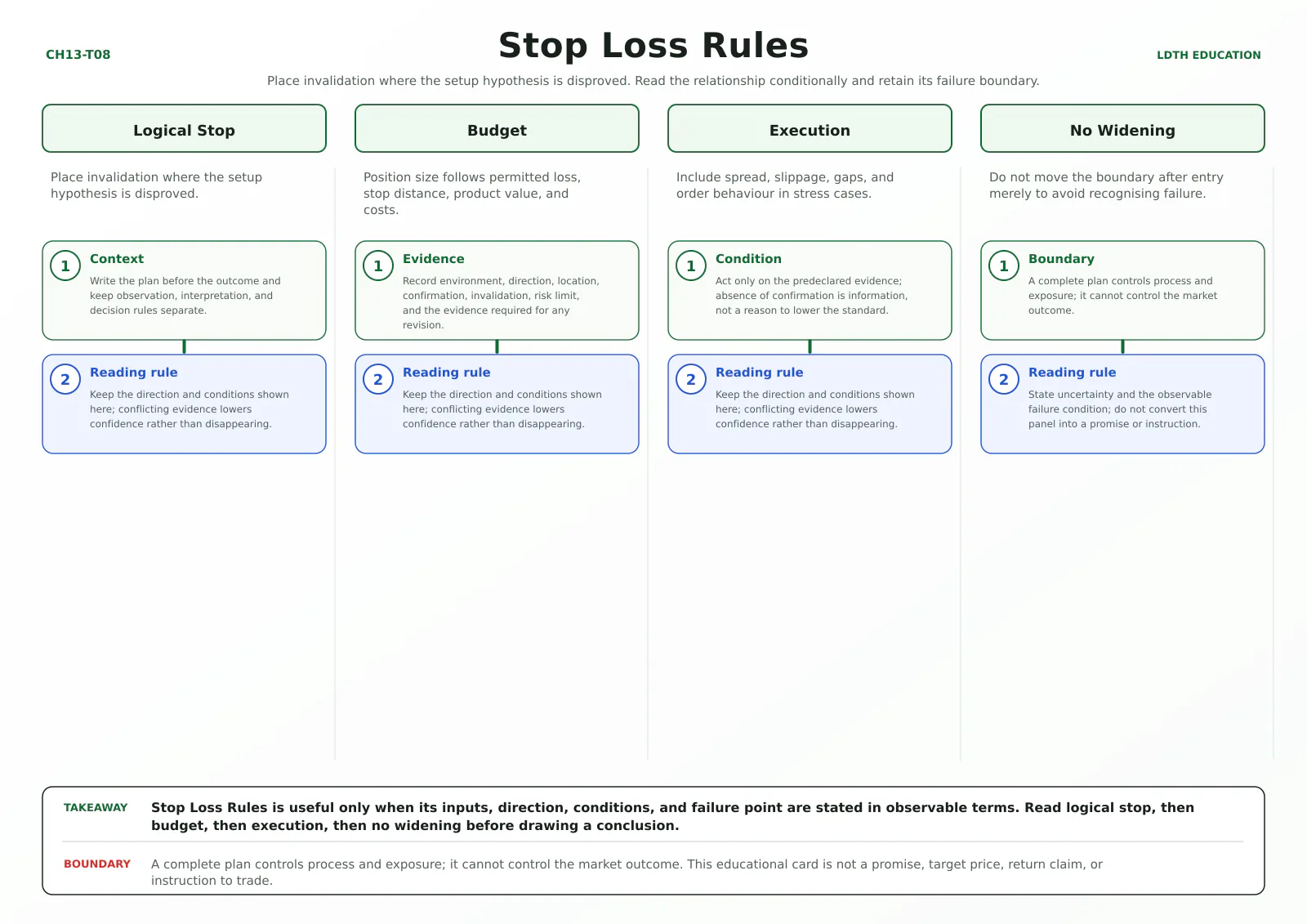
Place invalidation where the setup hypothesis is disproved. Read the relationship conditionally and retain its failure boundary.
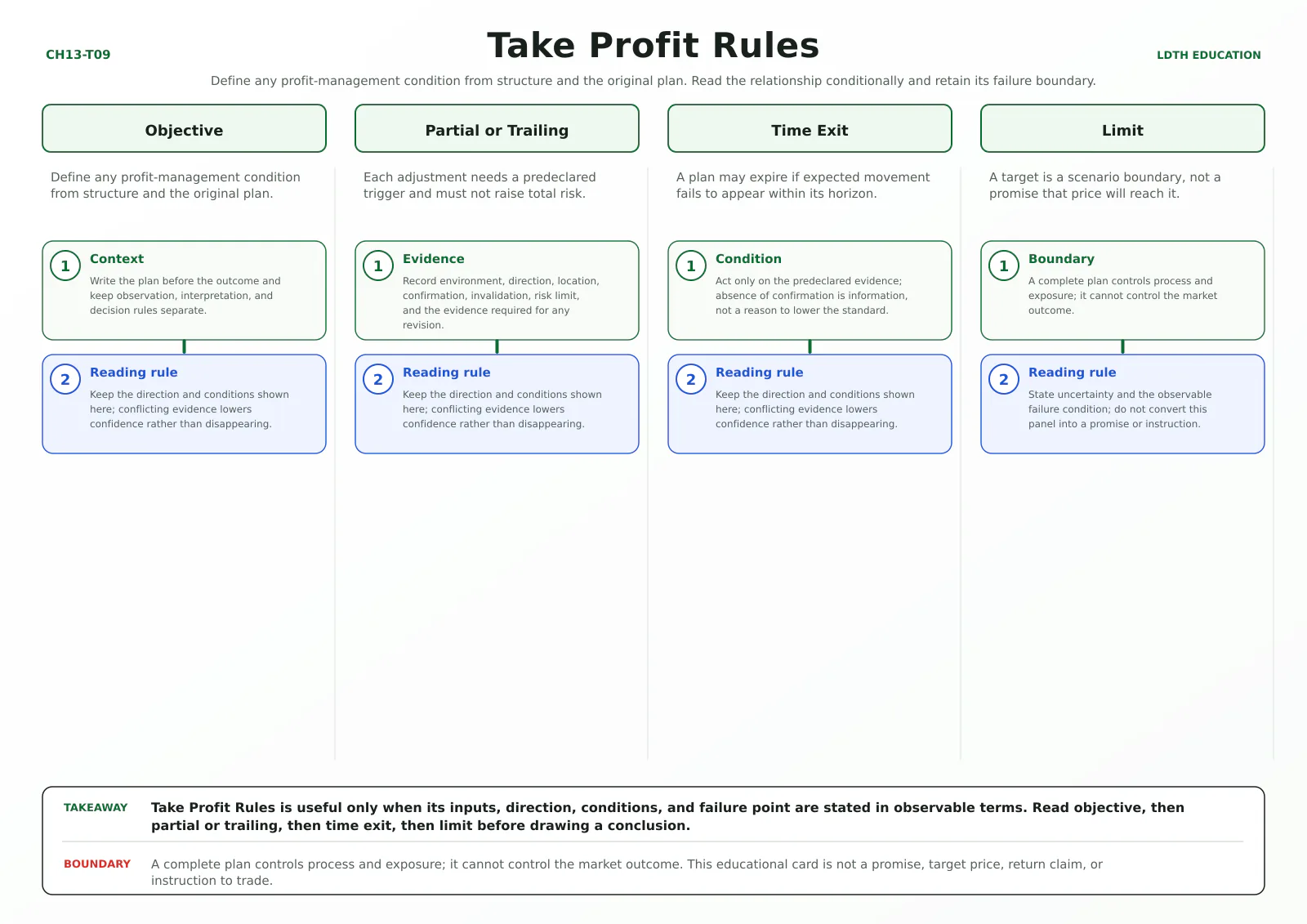
Define any profit-management condition from structure and the original plan. Read the relationship conditionally and retain its failure boundary.
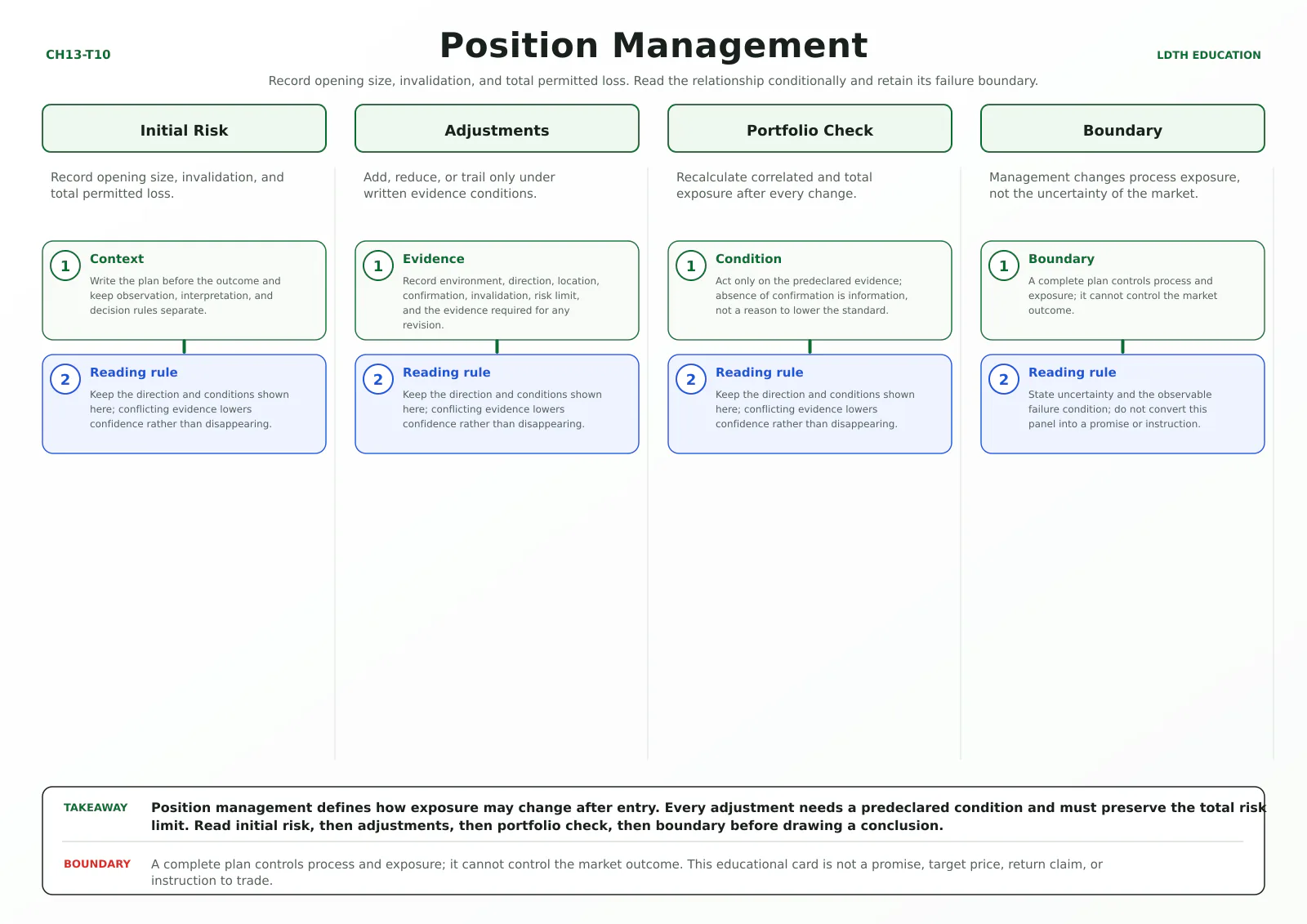
Record opening size, invalidation, and total permitted loss. Read the relationship conditionally and retain its failure boundary.
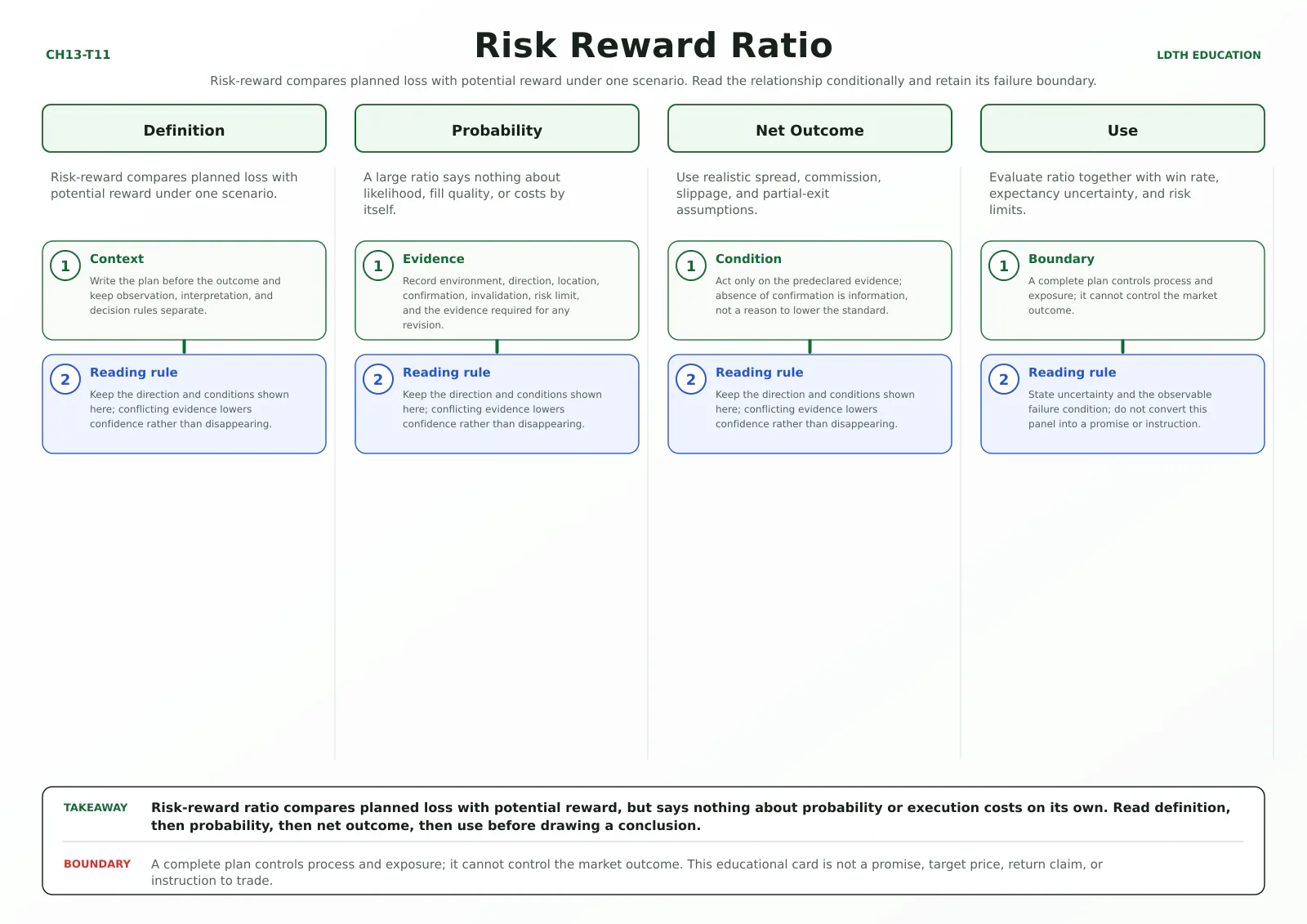
Risk-reward compares planned loss with potential reward under one scenario. Read the relationship conditionally and retain its failure boundary.
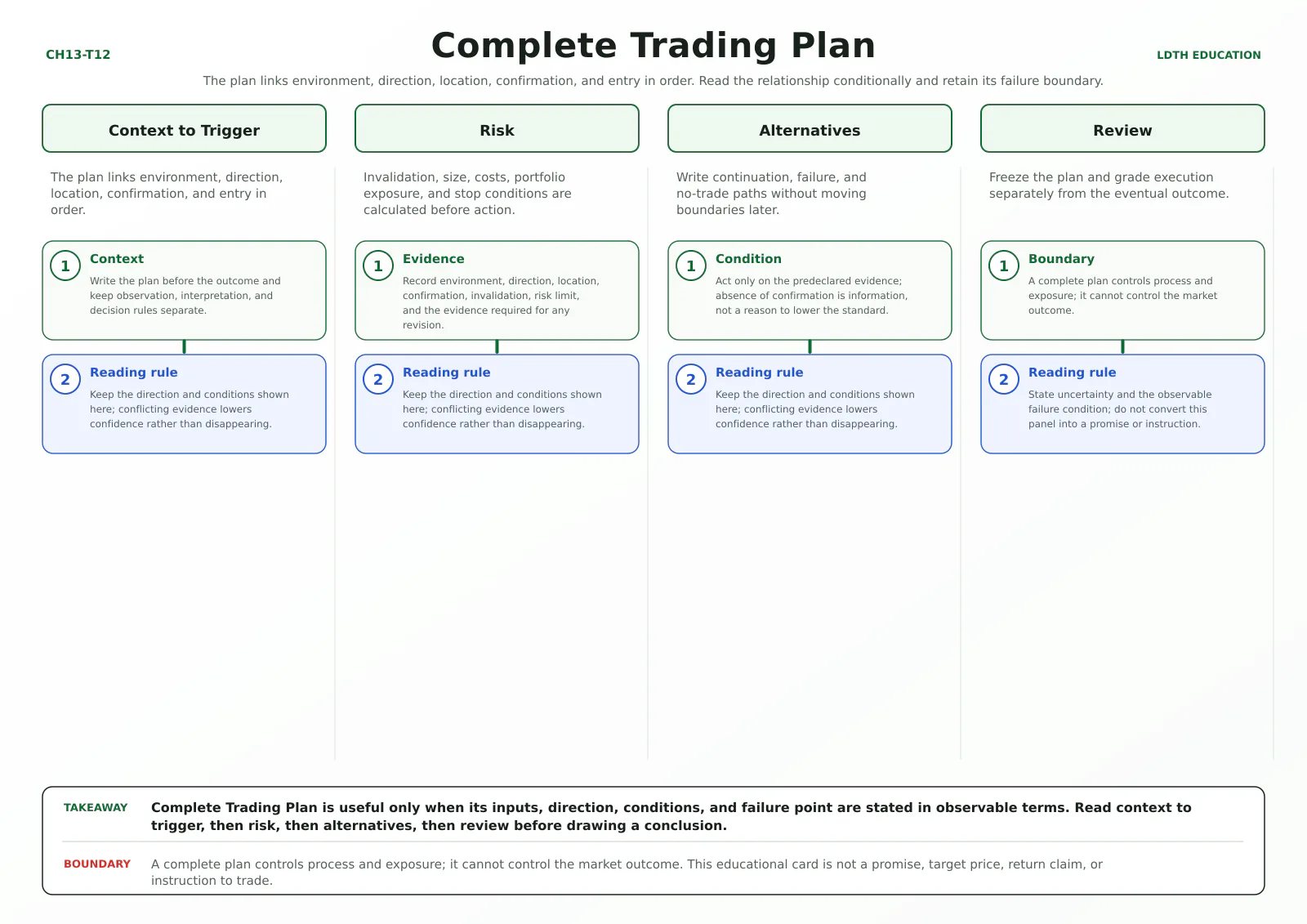
The plan links environment, direction, location, confirmation, and entry in order. Read the relationship conditionally and retain its failure boundary.