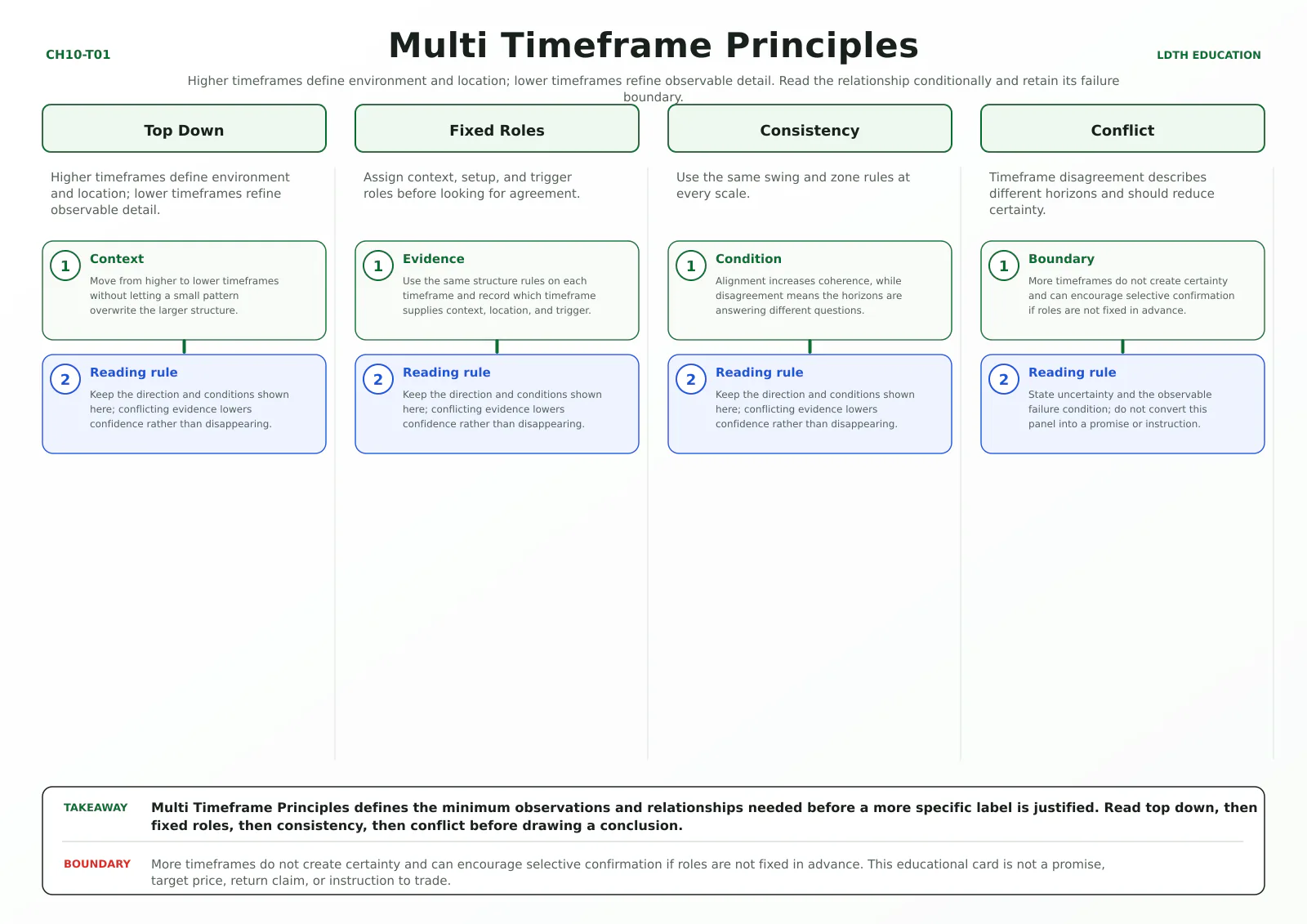
Multi Timeframe Principles
Higher timeframes define environment and location; lower timeframes refine observable detail. Read the relationship conditionally and retain its failure boundary.

CHAPTER 10 · VIDEO COURSE
Give each timeframe a role: context, structure, location or trigger.
5 reviewed videos · English + Simplified Chinese captions
VIDEO LESSONS
Choose an episode after expanding the player. Autoplay is disabled.
LEARNING CARDS
9 cards; select a card to open it at full size.
Higher timeframes define environment and location; lower timeframes refine observable detail. Read the relationship conditionally and retain its failure boundary.
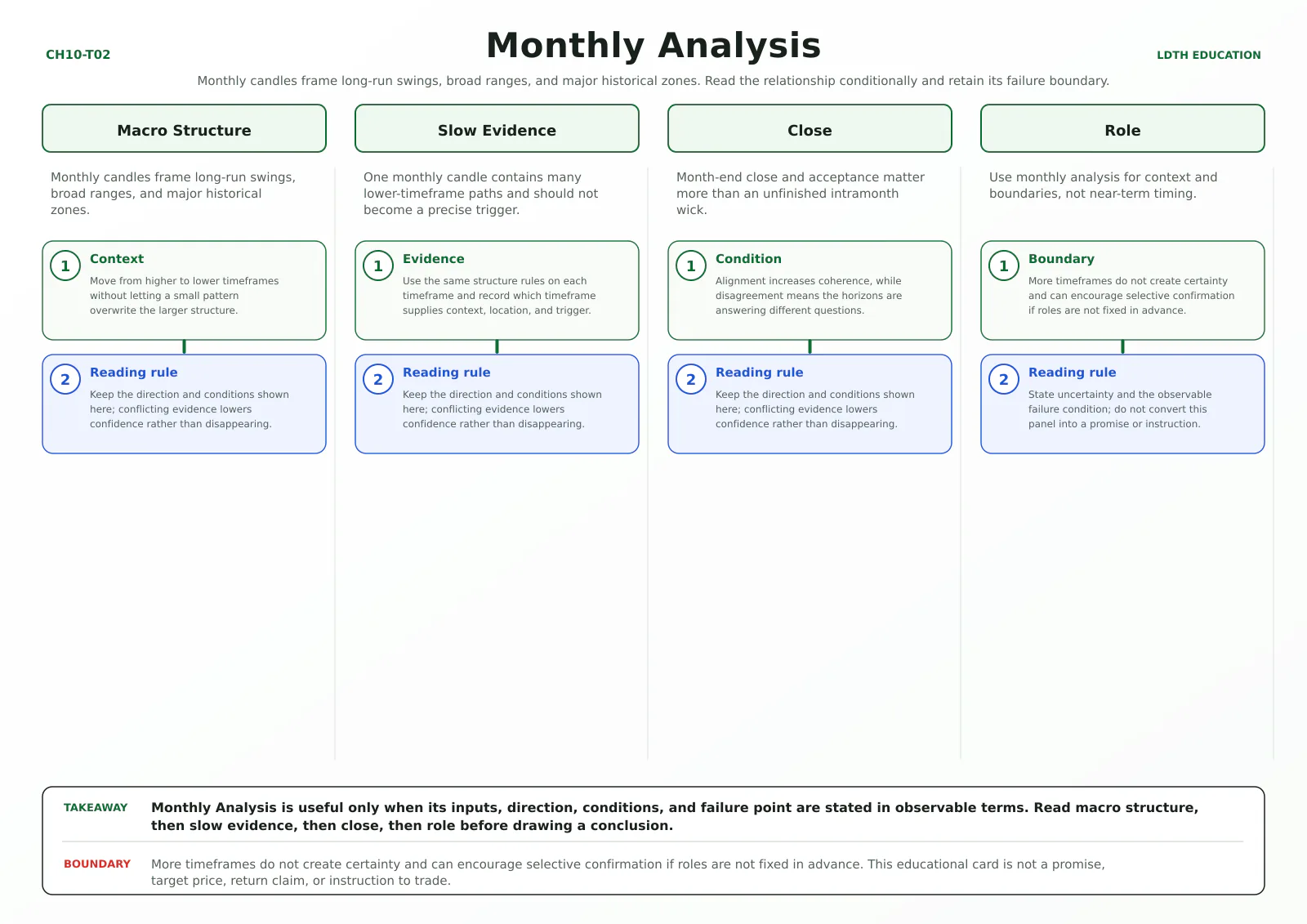
Monthly candles frame long-run swings, broad ranges, and major historical zones. Read the relationship conditionally and retain its failure boundary.
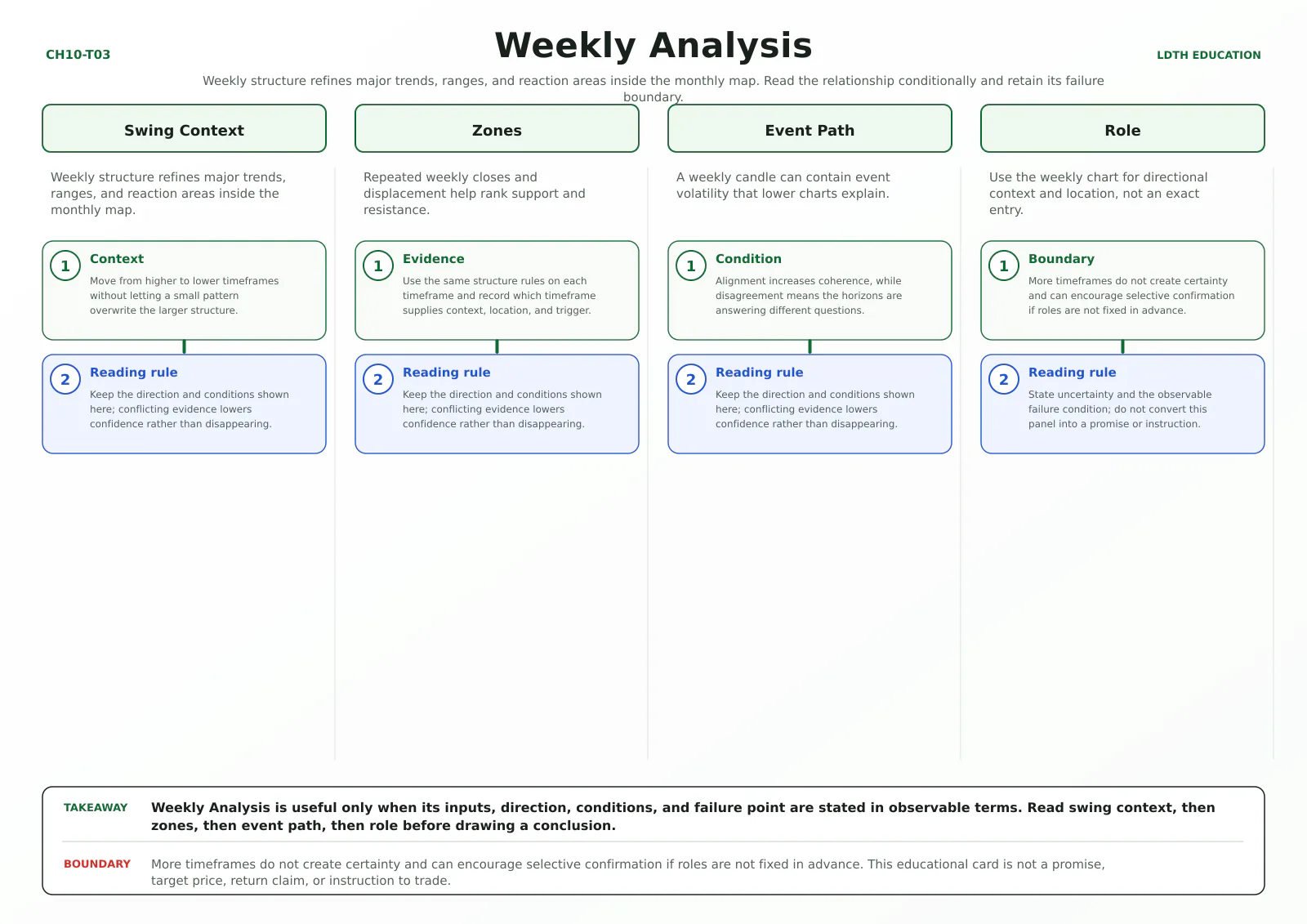
Weekly structure refines major trends, ranges, and reaction areas inside the monthly map. Read the relationship conditionally and retain its failure boundary.
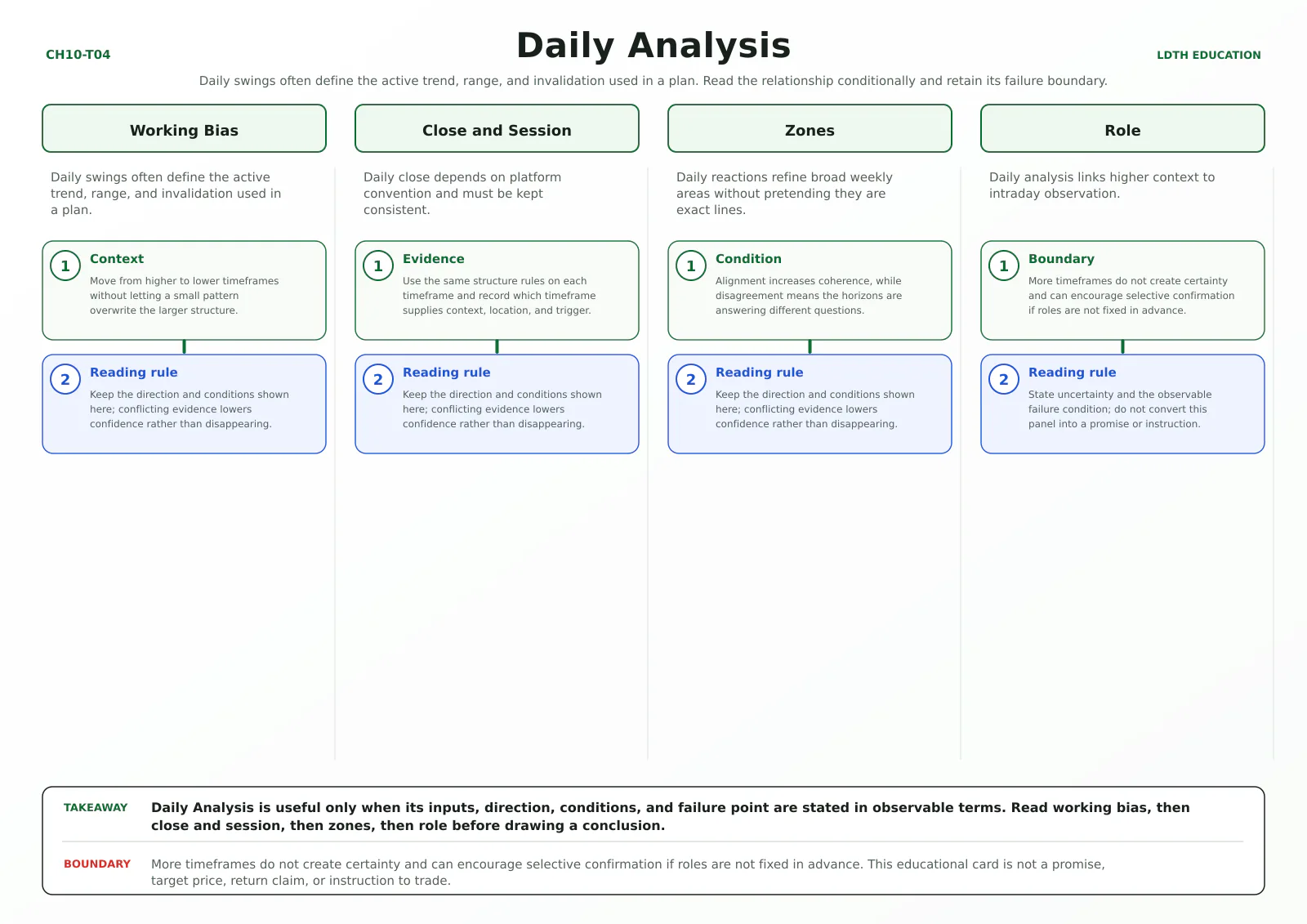
Daily swings often define the active trend, range, and invalidation used in a plan. Read the relationship conditionally and retain its failure boundary.
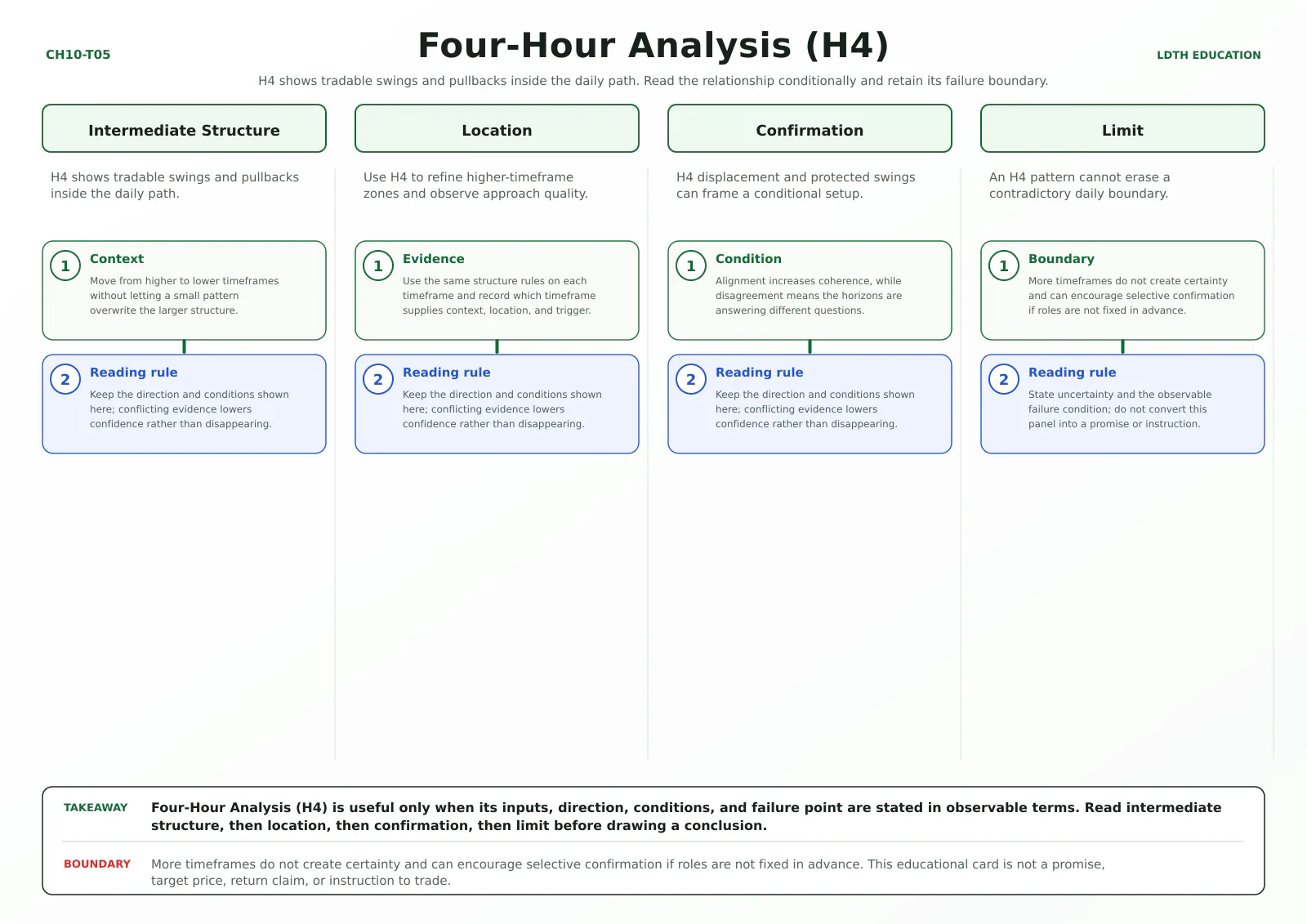
H4 shows tradable swings and pullbacks inside the daily path. Read the relationship conditionally and retain its failure boundary.
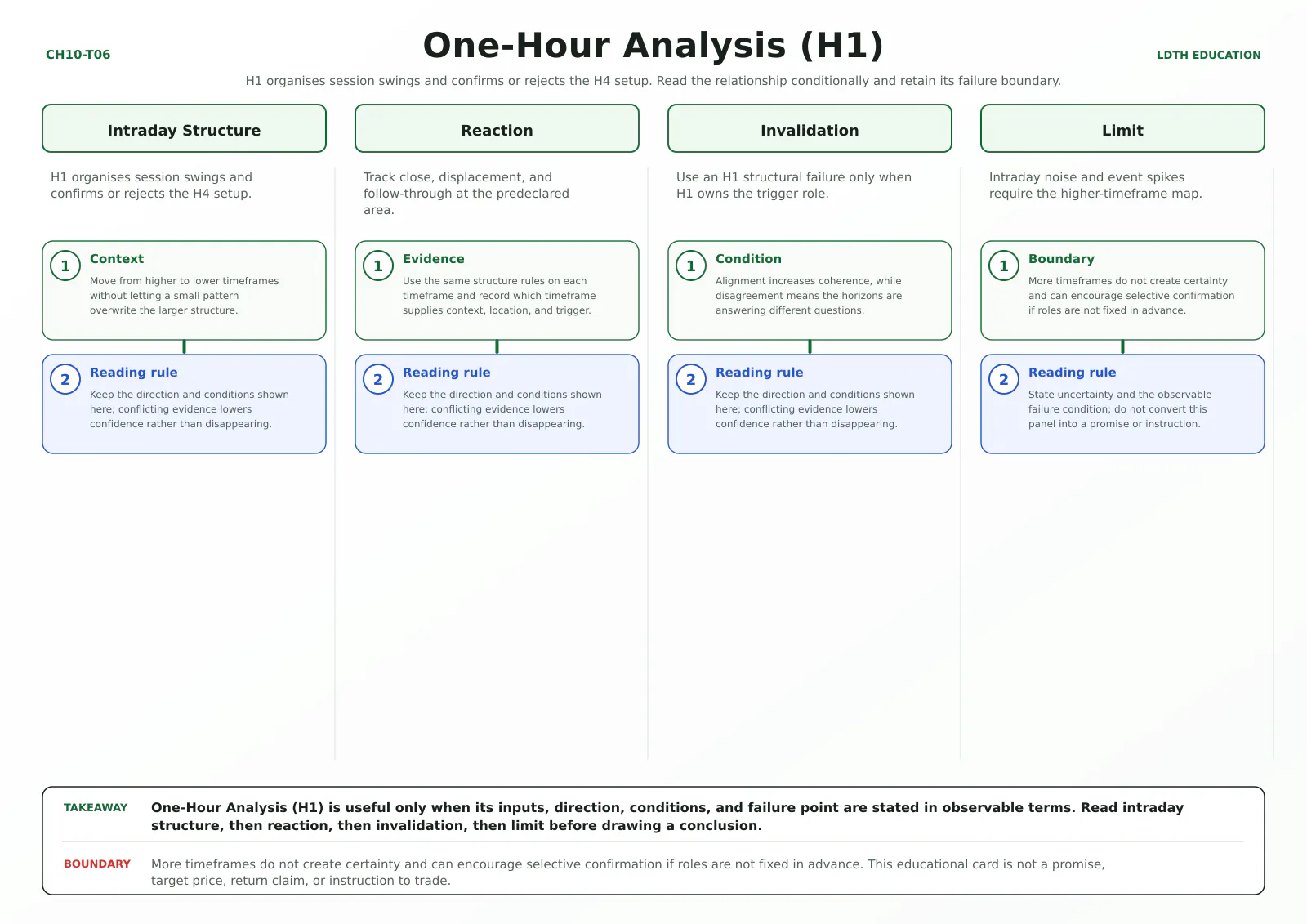
H1 organises session swings and confirms or rejects the H4 setup. Read the relationship conditionally and retain its failure boundary.
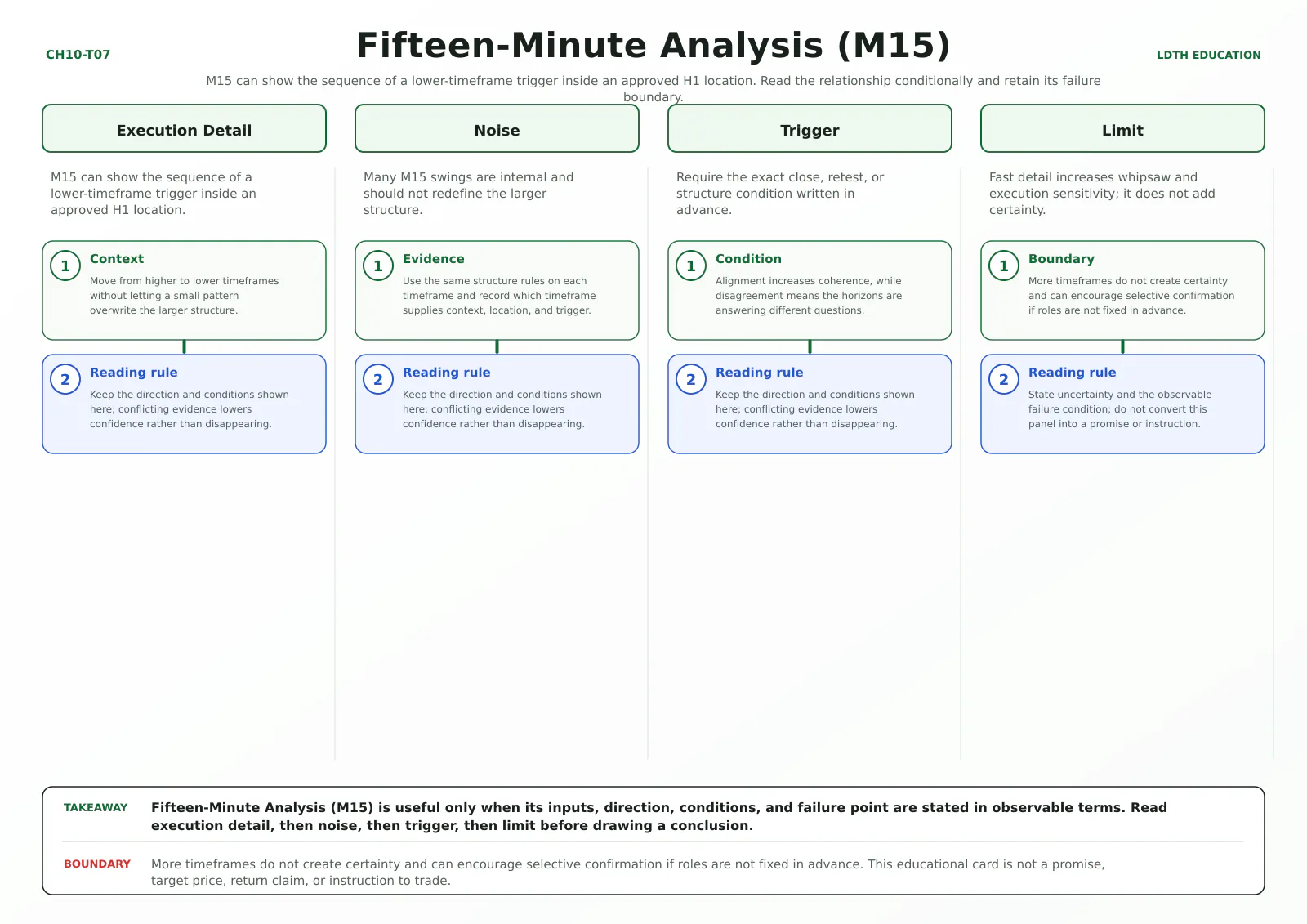
M15 can show the sequence of a lower-timeframe trigger inside an approved H1 location. Read the relationship conditionally and retain its failure boundary.
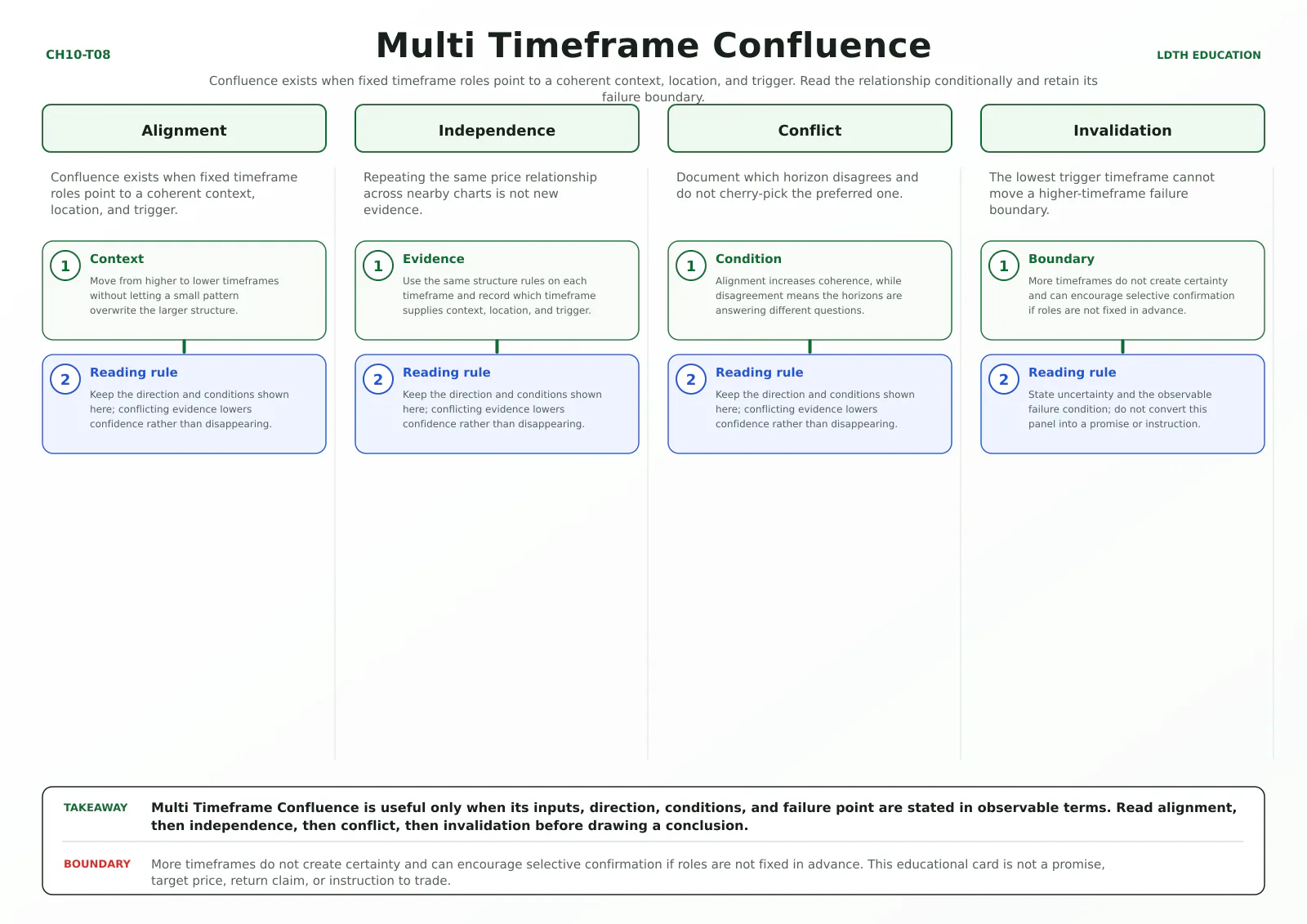
Confluence exists when fixed timeframe roles point to a coherent context, location, and trigger. Read the relationship conditionally and retain its failure boundary.
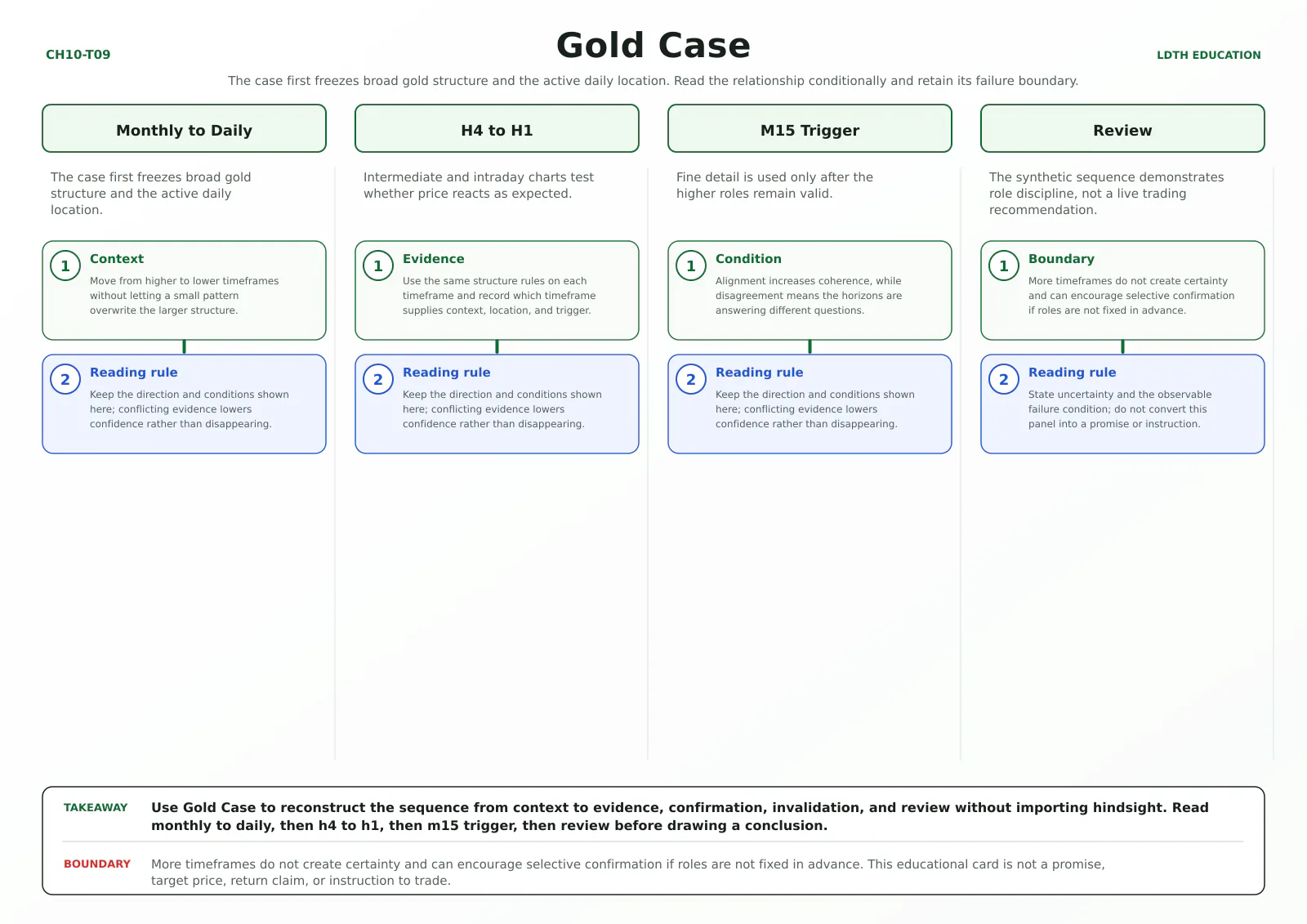
The case first freezes broad gold structure and the active daily location. Read the relationship conditionally and retain its failure boundary.